Do your homes have orange parquet floors? can develop a noticeably warmer, more orange appearance over time. This is often caused by the type of varnish used on the timber, as well as the natural ageing of the wood itself.
If you prefer a lighter, more natural-looking floor, there are a few ways to change the appearance of your existing parquet without replacing the entire floor.
Why do your parquet floors turn orange?
One of the main reasons is the old finish on the floor. Traditional oil-based varnishes contains oils, resins and other components that naturally amber as they age, particularly with prolonged exposure to UV light. Over time, the clear coating can take on a yellow or orange tone, giving the entire parquet floor an orange appearance. It is similar to how older plastics and painted surfaces can yellow with age.
How can you get rid of the orange parquet floors?
There are two common approaches if you want to change the appearance of an orange parquet floor:
1. Staining a different colour
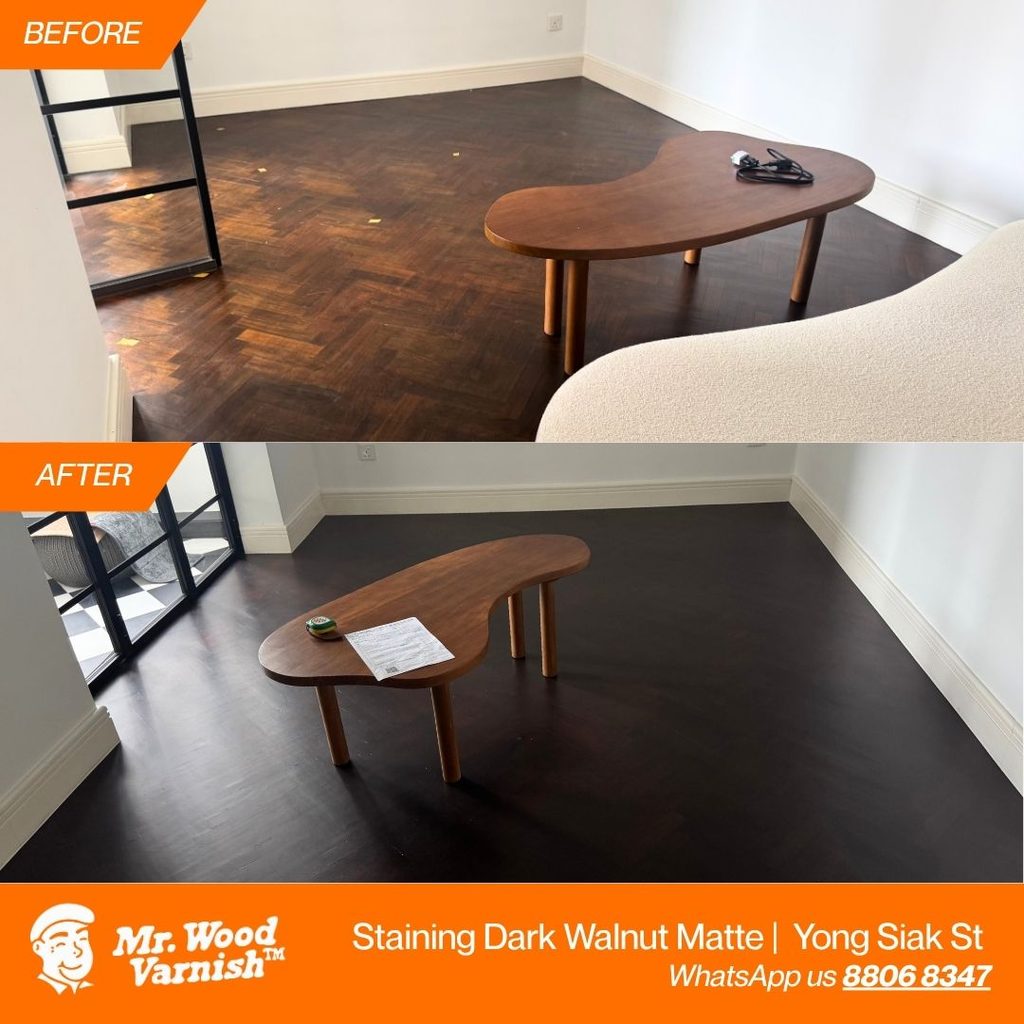
Staining allows you to achieve a specific uniform colour. For example, you could change an orange-tones parquet towards a darker walnut, brown or other chosen shade to achieve a completely different aesthetic.
The advantage:
-> You can create a specific colour and aesthetic
The downside:
-> Difficult to maintain long term. As the floor wears, fades or gets scratched, colour differences can become more noticeable
-> Most costly finishing solution (Due to higher workmanship skill & time required)
If your goal is a very specific colour, staining can be the right approach.
But if you simply want to remove the orange/yellow appearance and keep the wood looking natural, water-based varnish is a better option.
2. Water-based matte varnish
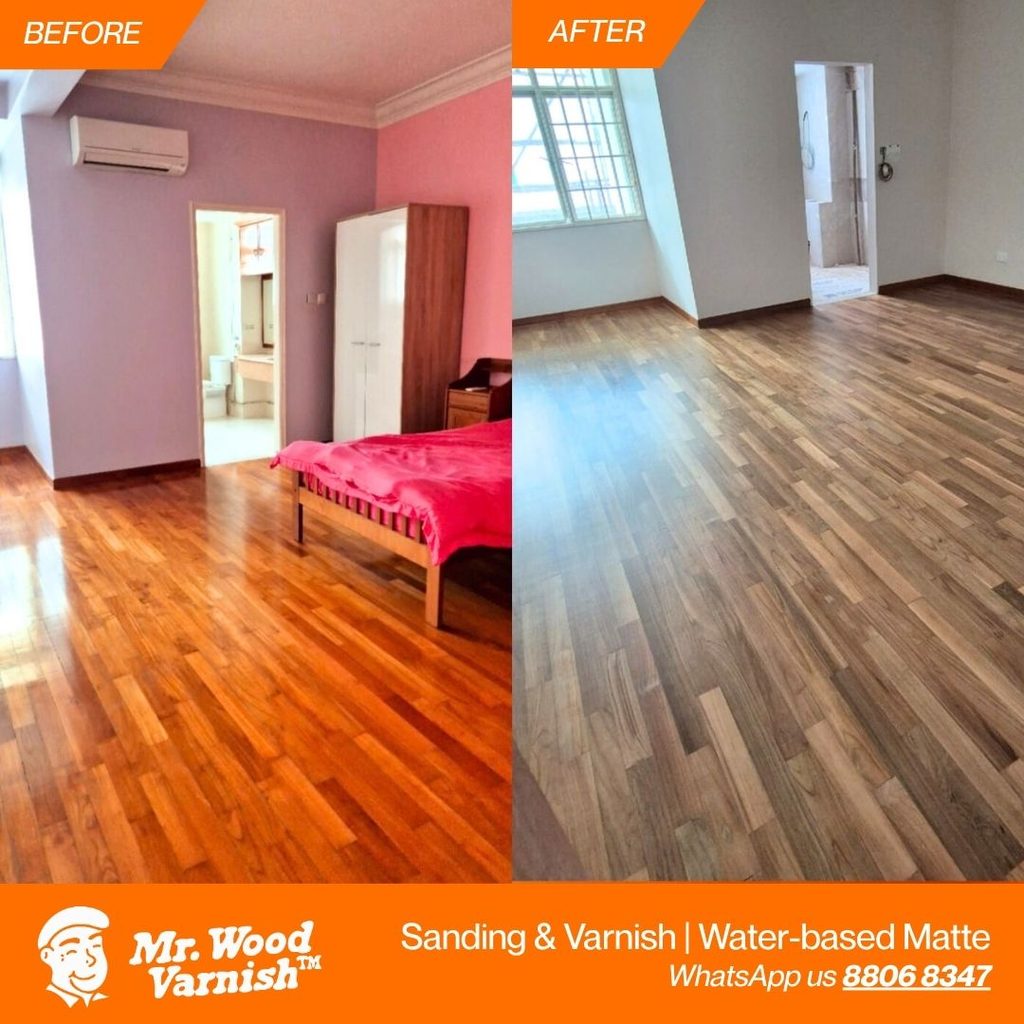
The varnish itself is clear. It does not bleach or dye the timber a lighter colour. But because water-based finishes do not have natural oils and resins, they do not develop the same amber/orange tone as they age. This allows the natural colour of the freshly sanded parquet to come through more clearly. The result is a lighter, cleaner and more natural-looking parquet floor.
We particularly like a matte finish for this water-based natural look. It gives the floor a more understated appearance compared with a glossy finish.
The advantage:
-> Lighter, more natural-looking finish
-> Low odor, Low VOC (Safe for homes with kids, pets, elderlies)
-> Easier to maintain
The downside:
-> More costly vs. traditional oil-based finishes
Read more about water-based vs. oil-based varnish, and price guide here.
It is important to understand that water-based varnish does not turn every parquet floor pale or white. The final colour depends heavily on the natural colour of the wood underneath.
What will water-based varnish look like on different types of wood?
Every type of timber starts with a different natural colour.
Water-based varnish essentially helps preserve and enhance that natural appearance, rather than changing the timber into a completely different colour.
TEAK water-based finish
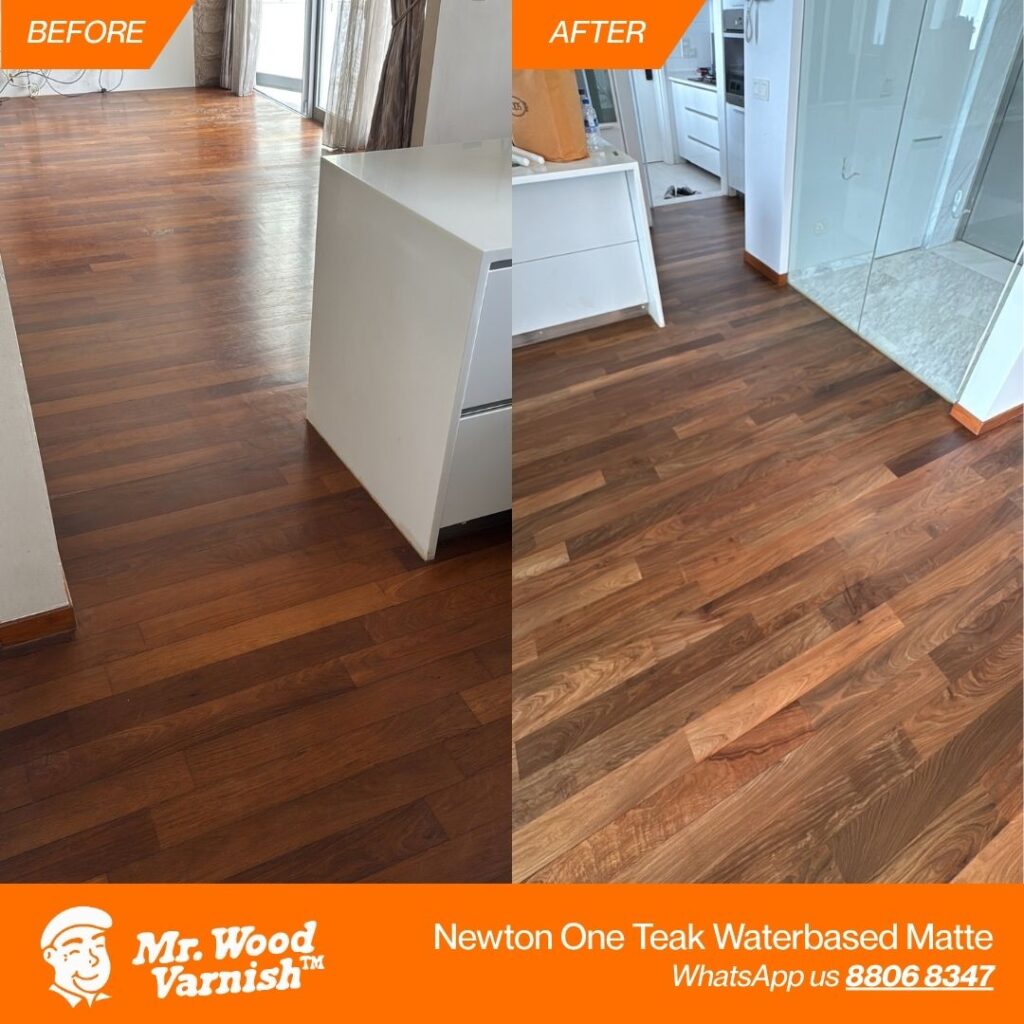
Teak naturally have medium to warm brown tones, with natural variations ranging from reddish-brown to golden-brown. The final look depends on the particular tones of your Teak parquet. With a clear water-based matte finish, these natural tones remain visible without the strong orange/amber look from an oil-based varnish.
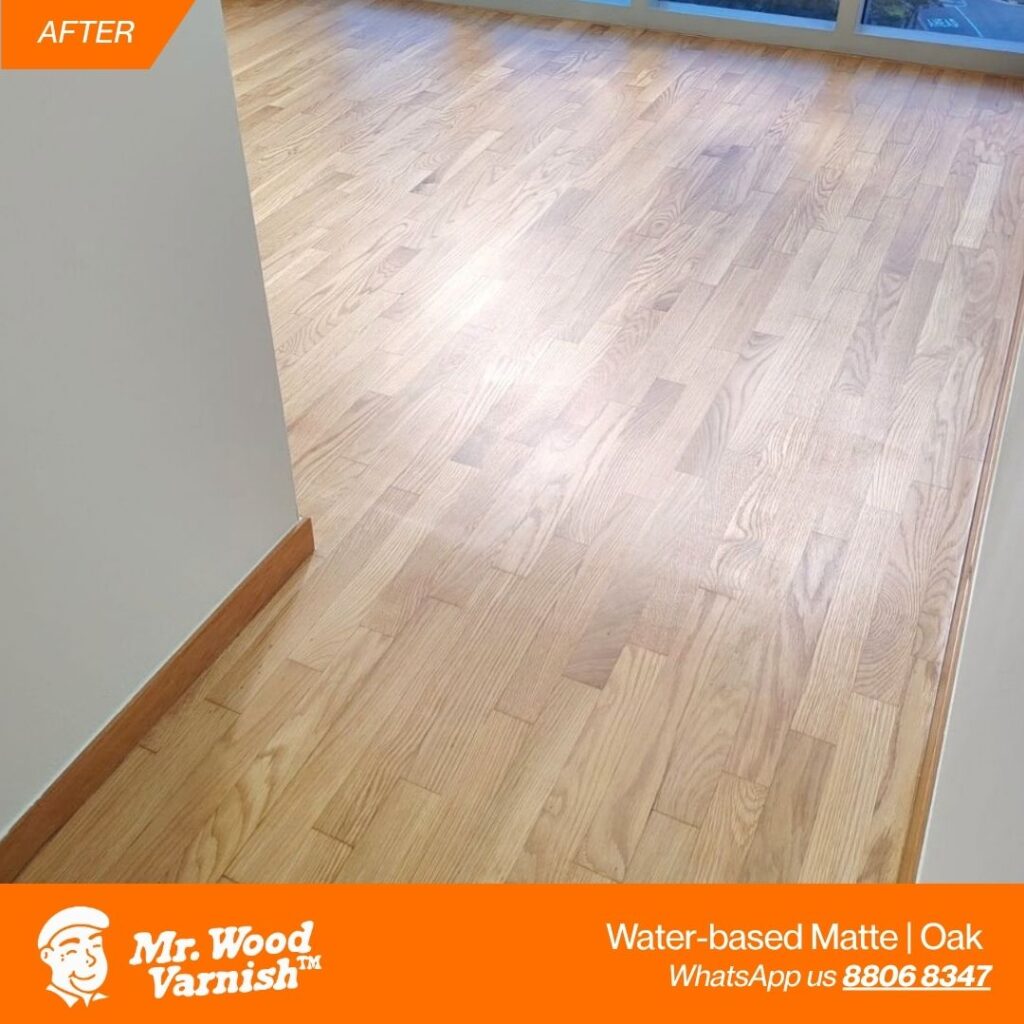
OAK water-based finish
Oak naturally starts much lighter, with pale beige, cream and white tones. Because the timber itself is lighter, the result after water-based finishing can appear significantly paler and more neutral compared with a warm-toned timber such as teak.
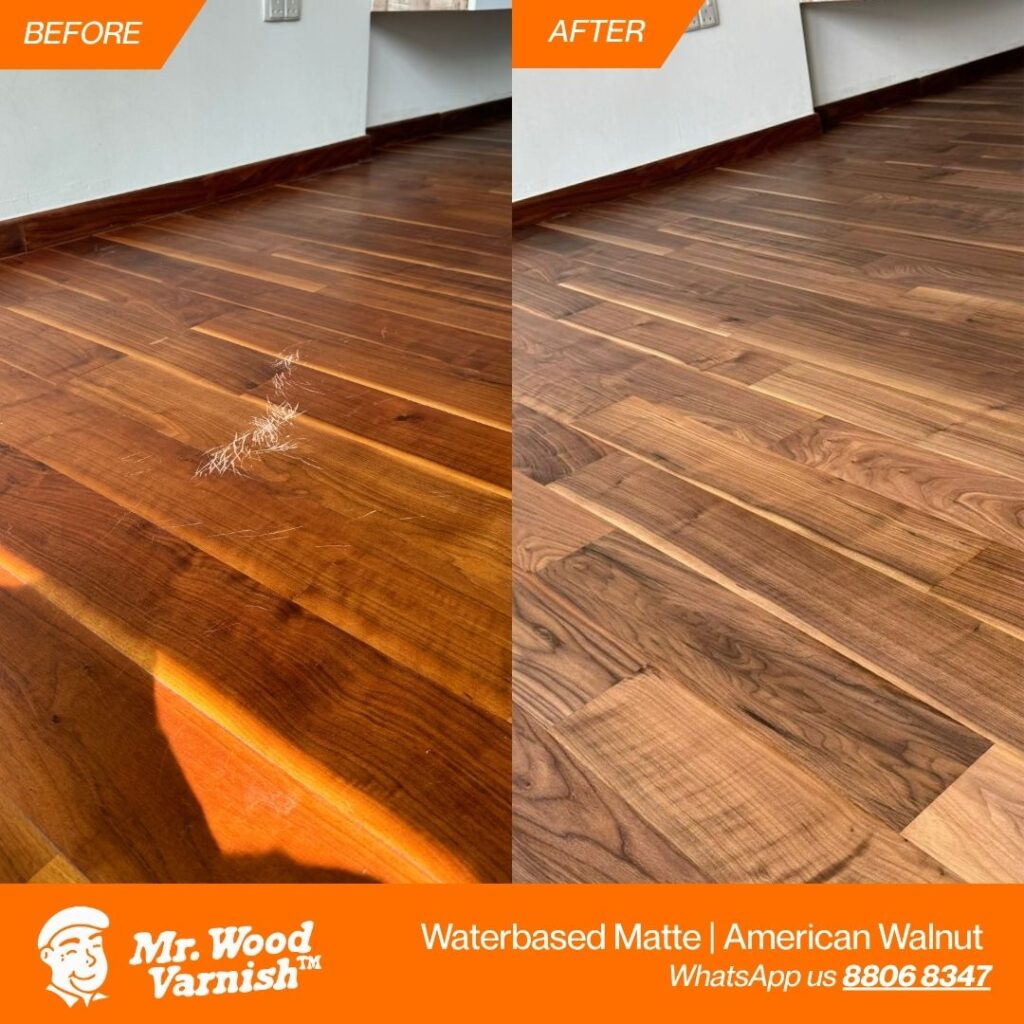
AMERICAN WALNUT water-based finish
American walnut naturally has a much deeper brown base. A clear water-based finish brings out the beautiful natural depth, variation and grain of the walnut timber.
How is water-based varnish applied to parquet?
Water-based varnish is not simply applied over your existing old varnish. To achieve a clean and consistent result, the existing finish needs to be properly removed and the timber prepared first.
Mr Wood Varnish™ signature water-based process:
1. Sanding
The old coating is fully sanded away to expose the timber underneath. This is an important step because applying a new finish over an old, yellowing coating would not remove the underlying orange appearance.
2. Buffing and polishing
Once the old coating has been removed, the floor is buffed and prepared to smooth out the timber and create an even surface for the new finish.
3. Gap filling
Gaps between the parquet blocks are filled before the finishing coats are applied. The gap-filling material is selected to work with the water-based system to achieve the best finishing results.
4. Apply water-based varnish
Finally, the floor is finished with our 2-coat water-based matte system. The clear finish seals and protects the timber while keeping the natural colour and character of the parquet, with a clean, understated matte appearance.
So, what to choose to fix the orange parquet floor appearance?
If you want to keep the character of your existing parquet while achieving a lighter, more natural look, water-based matte varnish is your solution.
If you want to transform your parquet into a completely different colour, staining gives you more control over the final look.
Want to fix your orange parquet floor? Send us a photo of your floor for a free assessment and quote.
We’re your one-stop solution to all your home improvement needs. Get us to help: Parquet sanding & varnish, Engineered wood polishing, Parquet repair, Outdoor deck varnishing, Marble polishing, marble gum grouting, and homogenous tile polishing.